TECHNOLOGY & PRODUCTS
Direct reduction for modern steelmaking
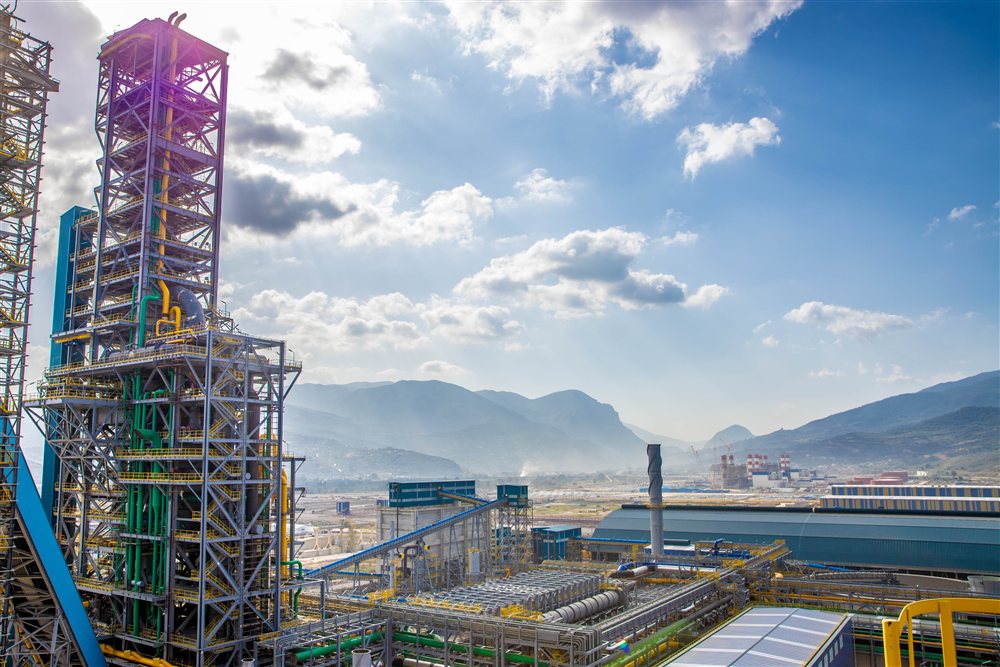
Reliable ironmaking technology designed for long-term operation
Steelmakers choose their ironmaking route based on the quality, consistency, and control required for their products and operations. Direct reduction provides a high-quality source of iron that can be produced independently of steelmaking, allowing greater control over input chemistry, plant configuration, and operating strategy.
Since 1969, Midrex has delivered direct reduction technology worldwide. MIDREX™ Plants are designed to operate reliably over decades under a wide range of raw material qualities, energy inputs, and regional conditions.
Performance built for long-term operation
Unmatched plant availability
MIDREX Plants consistently achieve - and often exceed - their annual rated capacity, delivering industry-leading uptime. High operating hours translate directly into greater productivity, stronger ROI, and dependable performance year after year.
Globally, and despite regional constraints such as market conditions, natural gas availability, and other limiting factors, 78 percent of MIDREX Plants exceeded their annual design capacity. On average, this represents 15 percent additional capacity when comparing design capacity with the highest annual production achieved.*
Proven production reliability
Backed by decades of operating success, the MIDREX™ Process accounts for approximately 80 percent of global shaft furnace DRI production. This unmatched track record reflects exceptional reliability, long campaign life, and stable performance across a wide range of operating conditions.
In 2025, at least eight MIDREX Modules established new annual production records, and at least seven set new monthly production records. In addition, 12 modules came within 10 percent of their record annual production, and 10 modules operated for more than 8,000 hours during the year.*
*Excluding Iran plants.
Operational flexibility
MIDREX Plants are designed for adaptability, with the ability to process a wide range of iron ore feed materials while operating with diverse energy sources, including a clear pathway to hydrogen-based ironmaking. In 2025, the total iron content of ores used ranged from 60 percent to more than 67 percent. Plants also demonstrated flexibility in reducing gas compositions and product configurations, including CDRI, CDRI-HBI, HDRI, HBI, and HBI-HDRI.
More than 12.8 million tons of hot DRI (HDRI) were produced by MIDREX Plants in 2025 and consumed in nearby steel shops, helping reduce energy consumption per ton of steel produced while increasing productivity.*
This flexibility enables operators to optimize plant performance based on local resources and market demands.
Advanced process performance
State-of-the-art MIDREX technology supports fast start-ups, smooth operation, and efficient production. Continuous innovation in automation, digital tools, and process optimization minimizes downtime and maximizes output from day one.
The achievement of new annual records by 26 plants in 2025 reflects the ongoing impact of these advancements in productivity, energy performance, and metallization.
*Values exclude plants in countries under U.S. trade sanctions
An integrated system, engineered to work as one
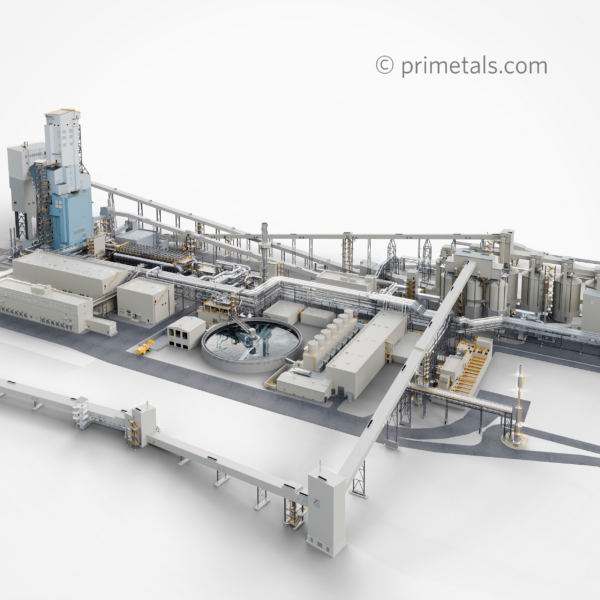
Midrex technology is engineered as an integrated system rather than a collection of individual components. Process design, gas handling, heat recovery, and control systems are developed to operate together as a single plant.
This system-level integration supports stable operation, predictable performance, and long equipment life across decades of use. Reliability is achieved through engineering coherence rather than add-on complexity.
What steelmakers say about working with Midrex

Decarbonization considerations
Reducing CO₂ emissions is one of several pressure points influencing decisions in ironmaking and steelmaking. Midrex technology can support different decarbonization pathways depending on regional energy systems, infrastructure readiness, and project design.
A detailed discussion of transition options, emissions performance, and implementation considerations is covered in the Steel Decarbonization section.
Designed to evolve over decades of operation
MIDREX Plants are designed for long service life and stable operation.
Engineering development focuses on incremental improvement, feedstock adaptation, and integration with site-specific requirements over time. Changes are implemented in a controlled manner that preserves proven operating practices and plant stability. This approach supports consistent iron production across decades of operation.
Read the latest Technical Articles
TECHNICAL ARTICLE
JUNE 2026
The Strength Within: Revealing the Mechanical Properties of DRI
Read more
TECHNICAL ARTICLE
JUNE 2026
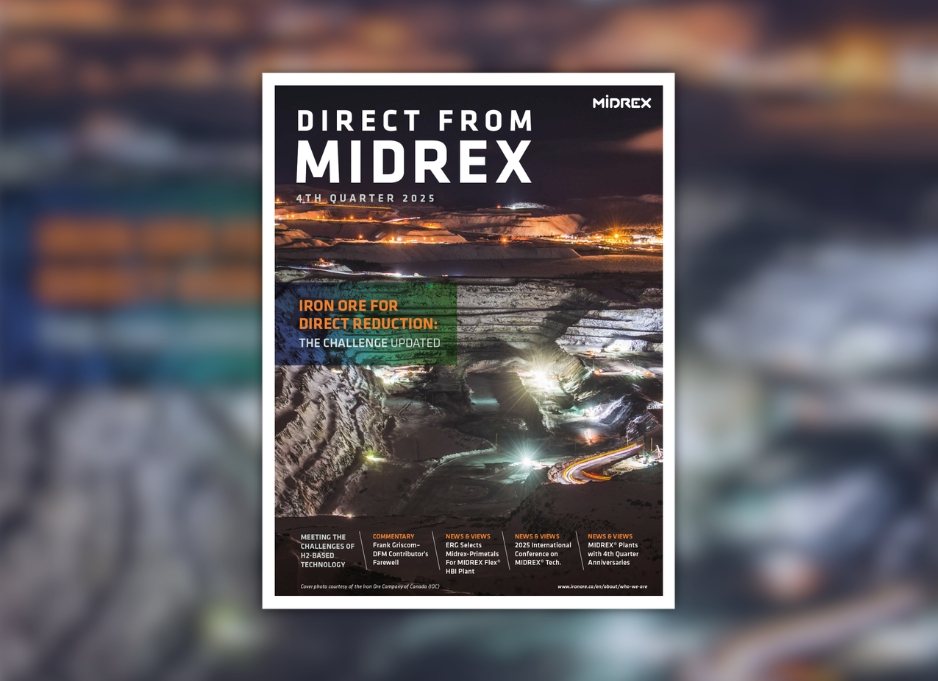
Iron Ore for Direct Reduction: The Challenge Updated
Read more
TECHNICAL ARTICLE
JUNE 2026
The Strength Within: Revealing the Mechanical Properties of DRI
Read more
TECHNICAL ARTICLE
JUNE 2026
Iron Ore for Direct Reduction: The Challenge Updated
Read more