TECHNOLOGY & PRODUCTS
Direct Reduced Iron (DRI)
A premium ore-based metallic for modern steelmaking
MIDREX technology accounts for more than half of global direct reduced iron production.
DRI provides steelmakers with a consistent, high-quality source of iron units that can be produced independently of steelmaking operations and designed for different furnace technologies and operating strategies.
What is DRI?
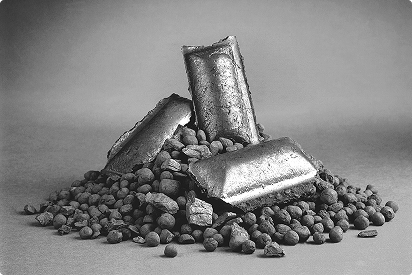
Direct Reduced Iron (DRI) is a premium ore-based metallic (OBM) raw material produced by removing chemically bound oxygen from iron oxide pellets and lump ores without melting. The result is high-iron content, low impurity metallic iron that serves as a flexible and efficient feedstock for steelmaking across multiple furnace technologies.
DRI and the role of steel scrap
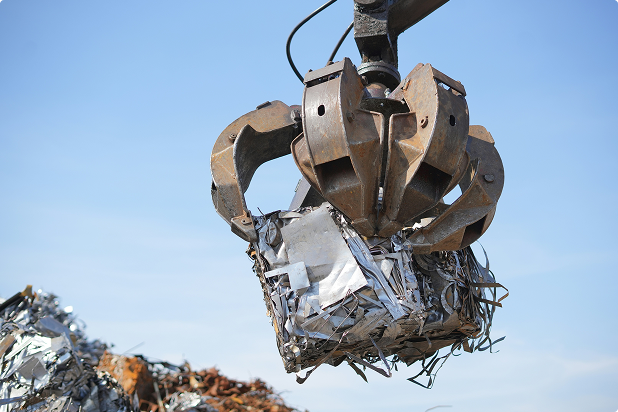
DRI plays an important role in supplementing steel scrap in EAF-based steelmaking.
While scrap recycling is essential to the steel industry, it currently provides roughly one-third of global metallic inputs to steelmaking. In practice, there is not enough scrap available to meet global steel demand. Scrap supply and quality vary widely from region to region.
Ore-based metallics such as DRI provide a consistent and controllable source of iron units for steelmaking.
DRI in the transition to lower-carbon ironmaking
The growing focus on reducing greenhouse gas emissions in the steel value chain has increased industry interest in direct reduction. Natural gas-based DRI is widely deployed as a lower-carbon alternative to coke-based ironmaking. The prospect of using hydrogen as the reducing gas points toward even lower emissions and is central to future steel decarbonization pathways.
DRI is high in iron content and low in copper, nitrogen and other undesirable metals, or tramp elements. It is used to produce a wide range of steel products as its physical and chemical properties make it suitable for different steelmaking routes.
Forms of DRI produced with MIDREX technology
MIDREX™ Plants can be configured to produce and transport DRI in the form best suited to application and logistics needs. These forms include cold DRI (CDRI), hot DRI (HDRI), and hot briquetted iron (HBI). MIDREX technology enables seamless switching between product forms within the same plant design when required.
Engineering excellence powered by people
DRI’s physical and chemical properties make it highly desirable for use in electric arc furnaces (EAFs), basic oxygen furnaces (BOFs), and integrated blast furnace operations.
These characteristics, combined with flexibility in product form and energy input, support its role as a foundational material for modern and lower-carbon steel production.
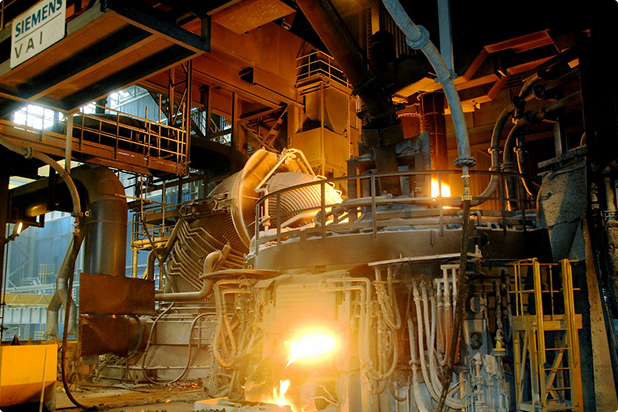
MIDREX CDRI Plant in Hamburg, Germany. Start-up: 1971
Key benefits of DRI

Very low residual element content
Can be continuously fed to the furnace
Predictable, uniform and certified chemical analysis
Can be hot-charged in integrated plants
Predictable mass and heat balances
Better slag foaming
Carbon content tailored to EAF requirements
Control of nitrogen in steel
Easier to handle than scrap
Melt consistency
HBI use in the Blast Furnace (BF)
Due to its physical properties, HBI is the preferred form of DRI for blast furnace use. It can increase hot metal production and lower coke consumption. It can make up to 30 percent of the BF charge with no significant equipment or process changes.
The addition of HBI increases hot metal production as more metallics are added in the BF burden: 8 percent more production when burden metallization is increased 10 percent or 24 percent more hot metal when metallization is increased to 30 percent.
HBI is highly desirable when
Hot metal availability is insufficient to meet demand
Hot metal requirements are not matched to blast furnace output
One blast furnace is offline for maintenance
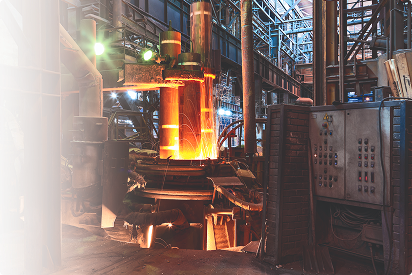
DRI use in the Basic Oxygen Furnace (BOF)
Advantages of using HBI
World DRI Statistics
Examine the latest annual data, production figures and global trends in direct reduction.